Holding Ground

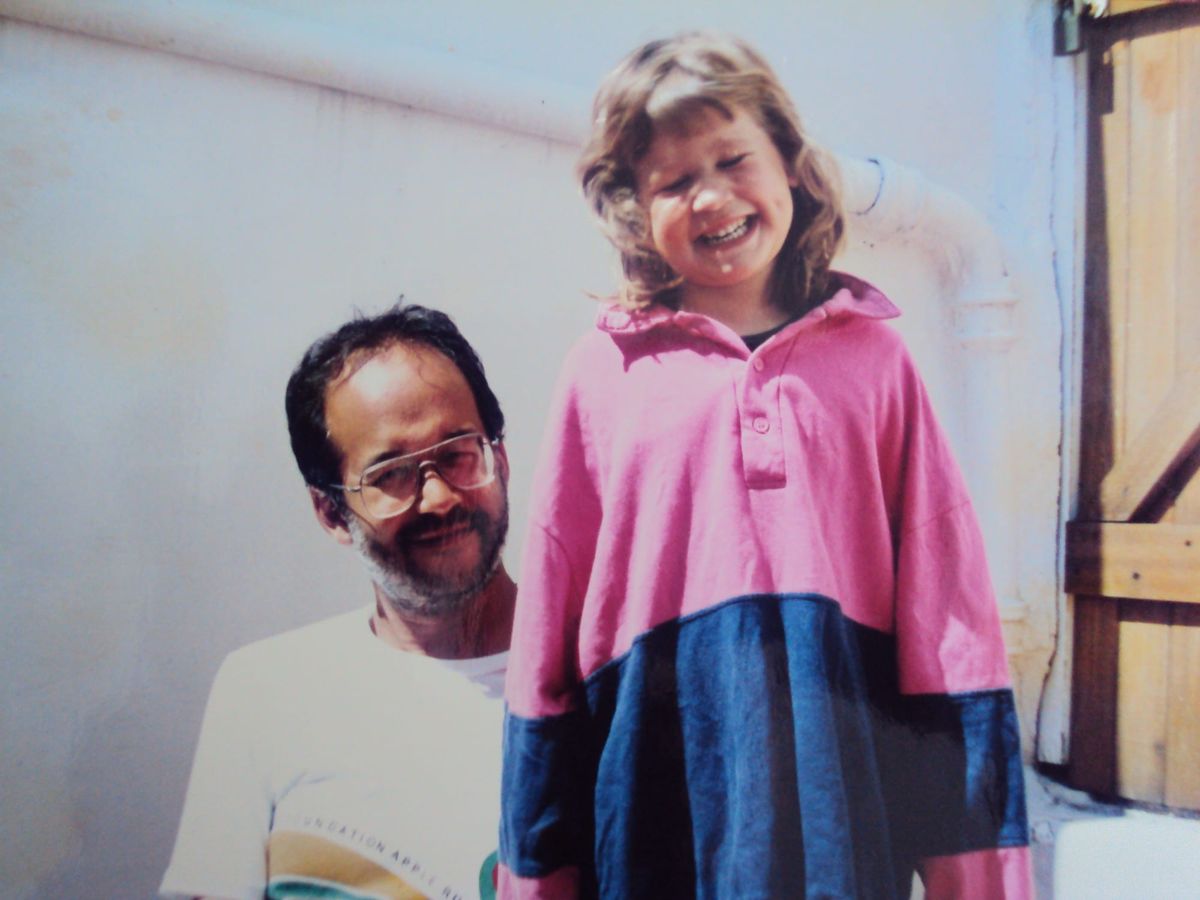
I spent the first few years of my life on Palmerston Road, in a suburb that has changed its name, its face and its price tag more times than I can count. This is a story about Woodstock — and the people who refuse to leave. A longer read, but hopefully worth the time.
A longer read again, but hopefully worth the time.
It's not too much of a stretch to imagine that it was a group of tipsy fishermen who gave this suburb its genteel name. With the slightest severing of the umbilical cord that tied the seaside resort to its maternal homeland, 'New Brighton' was transformed into what was to become the birthplace of a panoply of millennial mores - the Market, the Microroastery, and at least for six-year-old me, lounging on my neighbour's couch, MacGyver. In bestowing the title 'Woodstock' upon the mixed working class neighbourhood in the late 1860s, those fishermen imbued in its genetic makeup the very contradictions that the moniker itself inspires: forests and lush pastures and rolling English hills, alongside acid trips, no-nukes and Jimi Hendrix's screaming guitar.
Neither of those two visions of distant Woodstocks resembles the place I call my childhood home.
Leaving Cape Town Central Station in the direction of Simon's Town, Woodstock is the first stop on the southern line, the calcified artery that still shapes and divides this city. Before it was renamed after the watering hole of the popular 'Woodstock Hotel', this colonial village had been known as Papendorp, named after the 18th century Dutch settler, Pieter van Papendorp. It was at the 'Negro House' in Papendorp that many liberated African slaves, seized from illegal slavers Royal Navy after abolition in 1834, were educated in Dutch and English, in an attempt at pseudo-assimilation into a racially hostile world. The village's original name would have been an irritation to those 19th century working-class settlers, but its character (to their relief) remained decidedly English, albeit with a touch of colour absent from the mines and mills of Lancashire.
It was, however, in Papendorp that the British were beaten at their own game, a defeat made all the more galling by the team that they had played. While their politicians were far too concerned with the Panic of 1866 to take heed of shifts in power in the Cape Colony cricket league, a team of young soldiers - The Reformers - faced off against Zonnebloem College's First XI. Staged in Papendorp's Fort Knokke Cricket Ground, the latter's line-up included names such as N.C Mhala, Julius and Fandeso, representing a school that had only introduced the sport five years' earlier. With the absence of the now ubiquitous presence of the Barmy Army, the British cricketers were no match, and they were forced then - as they are repeatedly forced now - to accept that those you conquer (at least in sport, if not in politics), can always conquer you back.
I spent the first few years of my life on Palmerston Road, one of a long line of parallel streets that immortalise the generals, the poets and the distant shires of the Old Empire. Tucked in tightly between Numbers 33 and 29 lies the narrow strip of old oak flooring that held up the architecture of my early youth. There was no cricket ground at the end of Palmerston Road, but there was a wide open street. But those memories of mine, of dodging Toyota Conquests while practising skills learned at Baker's Mini Cricket, belong to a different childhood: the later years of the leafy suburbs, the unstated comfort of a more middle class suburban life. My memories of Woodstock are fragmented, and I sometimes find myself transposing a more opulent future on a less fortunate landscape.
Constructed in 1862, the train line to Wynberg meant that Papendorp - with its proximity to the docks, the womb of any major coastal town - experienced an industrial boom that transformed it from a quaint seaside hamlet into a restless working class enclave. By the time it adopted the name 'Woodstock' in the late 1800s, this village on the margins of the city centre had become home to a rapidly growing and ethnically diverse population. Its mass immigration mirrored the pace of the gold rush towns in the Transvaal. Woodstock, replete with its Victorian terraces, soot-stained warehouses, and air thick with salt from the sea and the sweat of hard labour, grew from the inside out. In 1900 alone, over 500 new buildings were erected, including residential housing, a school, a hotel, over a dozen shops and a brewery - the latter of which, over a century later, would need the diminutive prefix 'micro' to signal its artisanal virtue over the less fashionable industrial grit.
Among the 20th century immigrants to Woodstock was Serfodien Parker, who arrived from Bombay in 1906 and, thirty years later, built Parker's General Store that would become the anchor of my childhood on Palmerston Road, primarily because it had Pinball. In the afternoons, the neighbour's son and I would walk down to the corner cafe, armed with a little bit of small change to buy the Cape Argus and play a couple of rounds on the arcade machine. This was no 21st century Woodstock cafe, with its iced Mint and Matcha latte, and grass-fed super steak salads - sold, of course, at a super price. Parker's was your classic Cape corner 'caffie', and a young child's dream: rows and rows and rows of sweets neatly assembled in glass containers, and a shopkeeper, a second generation 'Parker', who would always throw in a Popeye Sherbert or two at no extra cost.
Serfodien Parker was just one of thousands of immigrants whose tapestry is woven into the history of this suburb. The family's story, though, is a familiar one - despite the political 'progress' that has been made over the past forty years and despite Woodstock (somehow, as if by magic) remaining a mixed-race area throughout the National Party's regime. By the early 1980s the apartheid government had had enough of the Parker family's presence in Palmerston Road. When 'Old Parker' died in 1981, and the government refused to transfer the property into the younger Parker's name, the family was forced to sell the properties for a mere R42 000 and relocate. It would take another decade for the Parkers to return to their generational home. Another decade, and another R290 000.
This story is only unusual insofar as it ends with return, and not because it starts with displacement. Consider The Old Biscuit Mill, an early 20th century biscuit factory converted into an industrial-chic space with a Microroastery and a Market held every weekend. Home to one of Cape Town's most prestigious restaurants, where the cost of a tasting menu is likely equal to the weekly wages of a working-class Woodstock resident, its coconut water, plant-based poke bowls, croissants and cortados exist a world away from the car guard watching over the rows of white SUVs on the pavements of poor houses.
At first glance, present-day Palmerston Road has too fallen prey to a similar march of market forces. In the place of Don Pedro's, an institution once known for its ribs, regulars and cheap red wine, is Pizza Connection, with its Burrata, Bresaola and Barolo. Parker's General Store now sits at the corner of Salisbury and Roodebloem, opposite The Hidden Leaf, which offers CBD-infused vegan lunch-ins, drinks and Dutch-inspired sweet and savoury waffles. In its place on Palmerston I found District Cafe, which initially evoked sharp disappointment in my mythologised memory of Popeye Sherbets and pinball machines. But the story of District Cafe is actually a story of resistance and resilience, given that it was established by a third generation Parker intent on retaining and reclaiming his family's proper place on Palmerston Road. Serving affordable halaal breakfasts, lunch and dinner, the owners of the District Cafe have no illusions about whose side they are on, offering me a 'Kingsley Zero' when I ask for a Coke Light. I may lament the linen that has replaced the linoleum floors that Parker's once had, but while I'm mourning aesthetics, they're holding ground.
Etched in my parents' collective memory of Palmerston Road is the day that a live crayfish arrived on our red stoep. In a nod to the work of the Woodstock fishermen of many decades past, it was not unusual to have someone knock on the front door offering a plastic bag filled with fresh snoek. What was unusual about this particular occasion, however, was that my parents said yes. Not to snoek - far too bony for my father's taste - but to some kreef, no doubt illegally acquired, which was handed over ceremoniously in a nondescript bucket. Unbeknownst to all three of us was the fact that its prehistoric form was still moving, insisting on life in our landlocked suburban hallway. My father recalls this incident with vivid clarity: the menacing rustle caused by the crustacean's antennae twitching against the plastic container, the loud clap of its claws snapping at the air in futile protest, and then the scream as it made contact with boiling water, and the silence which followed. I'm not sure any of us has ever recovered.
This was the Woodstock that guidebooks and websites don't mention: not quaint, not nostalgic, but pragmatic and alive, operating on networks of informal economies that no amount of artisanal renovation can replicate. The Woodstock of Main Road, where minibus taxis still ignore traffic lights and clean coworking spaces and KFC coexist. The Woodstock of timber merchants, of fisheries and of the imaginatively named "Kwaai Lappies" fabric shop. It is the Woodstock where we still see signs for shops and makeshift churches painted with authentic imperfection on the concrete which lies above their entrance door.
And it is a Woodstock where liquor stores stand diagonally opposite but are a far distance apart - one serving ultra-premium wines, craft beers, artisan whiskey and rooibos-infused gin; the other serving quarts of Black Label and Lion Lager for just over R20.